7 April 2025
AI phone agent vs answering service vs voicemail (SMEs)
Compare voicemail, answering services, and AI phone agents for small teams. See trade-offs on speed, consistency, risk, and a staged rollout path.
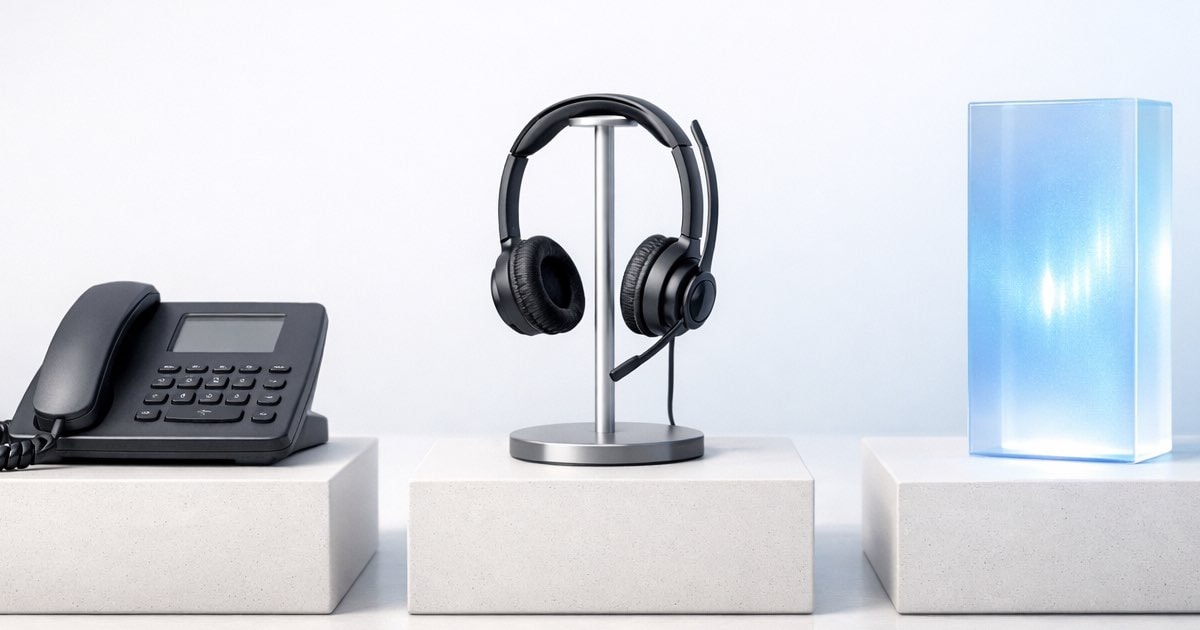
Voicemail, answering services, and AI phone agents can all work — but they solve different problems, and they fail in different ways. The best choice for a small team depends on your call reasons, your after-hours volume, and how much risk you can tolerate.
This guide compares voicemail vs answering services vs AI phone agents on speed, consistency, and risk, then gives a staged rollout path that small teams can actually execute. If you’re evaluating vendors, see our AI receptionist vendor checklist. For privacy and call recording, see AI phone agents in Australia: privacy and call recording.
TL;DR
- Voicemail is a fallback, not a system. It rarely answers the question that makes someone book.
- Answering services give human coverage, but quality depends on training and handover.
- AI phone agents can deliver consistent FAQs and lead capture at scale, but they must have strict boundaries.
- The right choice depends on your call reasons, after-hours volume, and tolerance for risk.
- A staged approach usually wins: stabilise after-hours first, then peak overflow, then automation and integrations.
The three options explained plainly
Voicemail
Voicemail is a message box. It does not solve the caller’s problem in the moment.
What it does well:
- captures details if the caller is willing
- sets a callback expectation if you state one clearly
What it does poorly:
- converts high-intent callers who want an answer now
- handles bookings, changes, and common questions
Answering service
An answering service is outsourced reception. A person answers and either takes a message, routes the call, or follows a script.
What it does well:
- a human voice can calm and reassure
- can handle edge cases if trained properly
- can follow your escalation rules if they are clear
What it does poorly:
- consistency varies by operator and training
- handover quality can be mixed unless you invest in it
- it can become “message taking” rather than conversion
AI phone agent
An AI phone agent is a system that answers calls, handles defined topics, captures details, and escalates when needed.
What it does well:
- consistent answers for approved FAQs
- lead capture and next-step setting
- after-hours and peak overflow coverage without staff disruption
What it does poorly:
- if the scope is vague, it can confuse callers
- if the rules are weak, it can say the wrong thing
- it needs ongoing ownership for knowledge updates and QA
Comparison table
This is a practical comparison for small teams. “Cost” is relative because pricing varies by vendor, call volume, and setup.
| Option | Cost | Speed to answer | Quality of experience | Consistency | Coverage | Risk |
|---|---|---|---|---|---|---|
| Voicemail | Low | Low | Low | High (always the same) | After-hours only | Low |
| Answering service | Medium | Medium to High | Medium | Medium | High | Medium |
| AI phone agent | Medium | High | Medium to High | High (if configured well) | High | Medium |
How to read “risk”:
- voicemail risk is low because it does not say much
- answering service risk is about miscommunication and poor handover
- AI risk is about incorrect answers or unclear escalation if you do not set boundaries
Best-fit scenarios for each option
Best fit for voicemail
Choose voicemail if:
- your call volume is low
- callers are mostly existing customers who will leave messages
- you can reliably return calls quickly
Avoid voicemail as your only option if:
- you rely on new enquiries
- your competitors answer calls after hours
- your service requires reassurance or explanation
Best fit for an answering service
Choose an answering service if:
- callers often need a human voice and reassurance
- you have varied enquiries that require judgement
- you can provide scripts, training, and frequent updates
- you need warm transfers or flexible handoff
Avoid it if:
- you will not maintain scripts and knowledge
- you cannot tolerate inconsistent messaging
- your team struggles to action messy notes and follow-ups
Best fit for an AI phone agent
Choose an AI phone agent if:
- most calls fall into repeat categories (hours, location, pricing posture, bookings, changes)
- you want reliable after-hours and peak overflow coverage
- you can define clear boundaries and escalation rules
- you want structured handover (call summary, intent, details)
Avoid it if:
- you want it to “handle everything”
- your business information changes often and nobody owns updates
- you deal with high-sensitivity conversations without a clear escalation path
A recommended staged path for small teams
Small teams win by reducing missed calls without creating new admin.
Stage 1: Start simple (this week)
- tighten your voicemail greeting
- state a clear callback window
- add an SMS auto-reply for missed calls if you can
- block time daily to return missed calls fast
Goal: recover more leads without new tools.
Stage 2: Cover after-hours and peak overflow (next 2 weeks)
Pick one:
- answering service for after-hours and overflow
- AI phone agent for FAQs, lead capture, and clear next steps
Keep scope tight:
- bookings and changes
- top FAQs
- lead capture
- escalation rules for anything uncertain or sensitive
Goal: stop losing high-intent callers when you are closed or busy.
If you want the playbooks for these periods, start here:
Stage 3: Add capability once the basics work (month 2)
- introduce booking links by SMS
- add structured call summaries and tagging
- integrate with your CRM or scheduling later, when your call flows are stable
Goal: reduce staff load while improving conversion.
Practical checklist
- List your top 10 call reasons from real calls
- Decide what must be answered live vs captured for follow-up
- Define your escalation triggers (upset caller, billing, sensitive, uncertain)
- Write approved answers for hours, location, pricing posture, booking rules
- Set a callback window you can actually meet
- Decide your staged rollout: after-hours first, then peak overflow
- Put a weekly review habit in place for call outcomes and script updates
CTA
If you want, we can map your top call reasons and recommend the best fit across voicemail, answering service, and an AI phone agent. You will leave with a staged plan that matches your team capacity and risk tolerance.
Book a walkthrough or browse more guides in our articles library.
FAQ
Is an answering service cheaper than an AI phone agent?
It depends on call volume, hours covered, and how much training and support you need. The bigger cost is often internal. If notes are messy or follow-up is slow, any option becomes expensive.
Will customers hate AI?
Most customers want an outcome: an answer, a booking, or a clear next step. They get frustrated when the experience is slow, vague, or confusing. A tight scope and fast escalation keeps trust high.
Does voicemail actually work?
Sometimes, mainly for existing customers who are motivated to leave a message. It often fails for new enquiries because many callers do not leave voicemails. They call the next option.
What is the safest way to pilot an AI phone agent?
Start with after-hours and overflow only. Limit scope to FAQs, lead capture, and next steps. Use a “do not guess” rule and escalate when uncertain. Review calls weekly and tighten scripts.
Can an answering service book appointments?
Some can, but it depends on their process and your systems. In practice, many services focus on message capture unless you invest in training and a clear booking workflow.
What matters more than the option we choose?
Follow-up speed and clarity. If you respond quickly and make the next step obvious, you recover more leads regardless of channel.