Published: 1 November 2026
Missed-call text-back or AI receptionist: which fits your business?
Compare missed-call SMS replies with an AI receptionist. Check who handles replies, when callers need an answer and what counts as a completed enquiry.
 By Matthew WalkerFounder, Valory AI
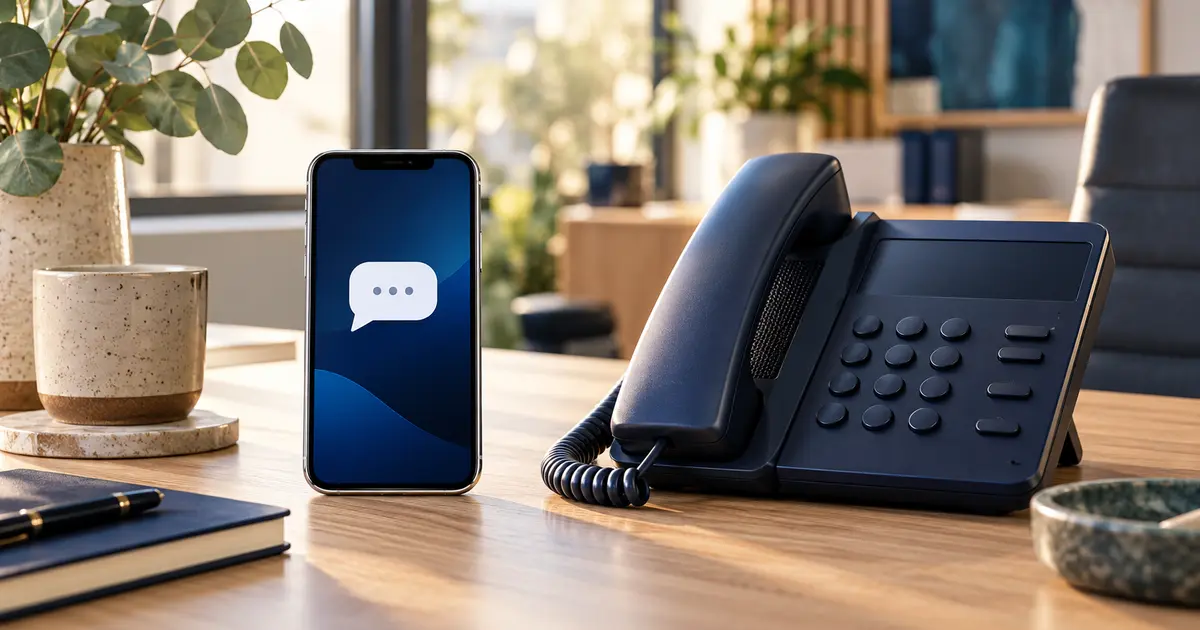
A missed-call text-back can be useful when you cannot answer the phone but can follow up soon afterwards. An AI receptionist is worth considering when callers need an answer, a few questions handled or a clear next step during the call.
The decision depends on what callers need and who will finish the job. An automatic acknowledgement is not a conversation or a booking.
First, check which product you are comparing
“Text-back” can describe several different services.
| Option | What happens | What still needs an owner |
|---|---|---|
| Fixed missed-call SMS | An unanswered call triggers a prepared text, perhaps with a callback message or booking link | Replies, unanswered questions and any enquiry that does not complete online |
| Two-way or conversational SMS | The caller can reply; a person or configured automation continues the conversation | Exceptions, incorrect assumptions, requests outside the workflow and unresolved conversations |
| AI receptionist | The call is answered and follows an agreed conversation, with options such as information, enquiry capture or a scoped handoff | Enquiries needing staff judgement, failed handoffs and any action outside the agreed setup |
Ask to see the specific workflow you would buy. Sending one SMS is different from managing a conversation; taking a message is different from making a booking.
For the wider choice between voicemail, people and voice automation, see our phone agent, answering service and voicemail comparison.
When text-back can be enough
Text-back can suit straightforward requests when someone can respond to the messages. A solo operator might reply during the next break. A booking link may help a caller who already knows which service to choose.
Decide who checks the inbox, how soon they can reply and what happens outside working hours. If nobody has time to act on replies, text-back creates another queue.
When answering the call matters more
Consider voice answering when callers need to explain a complicated request, check your service area or find the right person during the call. Some will prefer speaking to following a link.
Confirm what the receptionist can answer, record or book, and when a person takes over. A callback request is not a successful transfer or a confirmed appointment. If human handling is essential for a call type, include that in the setup.
Check whether the text can do the job
A missed-call SMS needs a usable destination number. Ask the provider what happens when caller ID is withheld, the number cannot receive texts, or the message fails.
Also check the sender. A business name on a text is not proof that the caller can reply to it. Twilio documents alphanumeric sender IDs as one-way messaging, and ACMA notes that these headers generally cannot receive return messages. If your message asks someone to reply, test that replies reach the right inbox. Twilio sender-ID documentation, ACMA SMS guidance.
Before adding marketing content or follow-up sequences, check the applicable consent, identification and unsubscribe requirements in ACMA's guidance.
One enquiry, three different outcomes
Consider this illustrative example: someone rings a cleaning business about a regular office clean. The owner is working and cannot answer.
With a fixed text-back, the caller receives an acknowledgement and a request for more details. Someone must still read the reply, confirm the service area and arrange the next step.
With conversational SMS, the workflow may collect the premises type and requested frequency. The business still needs to decide who can arrange a site visit or provide a quote.
With an AI receptionist, a configured conversation may collect those details during the original call and pass them to the person responsible for commercial enquiries. Booking a site visit would require that action to be included in the agreed setup.
The useful comparison is how reliably the enquiry reaches the person who can progress it. None of these steps is a completed cleaning contract.
Compare the whole cost
A low monthly fee is only part of the comparison. Ask about setup, phone numbers, messages, call minutes, transfers and any charge for the next step.
Then consider the staff work that remains. Ten complex enquiries may require more attention than a much larger number of simple opening-hours questions. There is no universal missed-call count at which one option becomes the better buy.
Use your own recent calls to compare:
| Your situation | What to investigate first |
|---|---|
| Straightforward enquiries and reliable staff follow-up | A simple text-back with a clearly owned inbox |
| Callers mostly want an existing booking link | Whether the link matches their need and the booking is actually completed |
| Callers need questions answered or details collected immediately | A voice workflow with a defined scope |
| Sensitive or unusual enquiries need a person | Human handling and an explicit fallback |
| A mix of these situations | Which call types each route should handle |
A link being sent is not a booking being made. Our phone bookings versus online bookings guide explains how to connect those steps.
Try the actual path before committing
For text-back, verify three specific things: the intended missed call triggers the message, a reply reaches its owner, and any booking link completes the right booking. Check whether repeated calls create repeated messages.
Then measure genuine enquiries progressed, not just texts sent. Record which conversations still needed chasing.
If you are considering an AI receptionist, book a conversation with Valory and bring one or two examples of the calls you miss. We can discuss the workflow you need and the scope that would need to be confirmed.