Published: 20 March 2026 · Last updated: 11 June 2026 · Author: Matthew Walker
How to reduce missed calls in a dental practice
A practical dental operations playbook for reducing missed calls, tightening callbacks, and recovering more new-patient bookings without front-desk chaos.

Missed calls in a dental practice are rarely caused by one big mistake. They usually come from normal operating pressure: the front desk is helping a patient, the dentist is mid-procedure, a hygienist needs support, the phone rings again, and by the time someone looks up the call is gone.
The problem is commercial as much as operational. A missed call might be a new patient, an overdue recall patient ready to book, or an existing patient trying to reschedule a slot that will otherwise sit empty. If you are trying to improve dental call handling, the goal is not perfection. It is to make sure fewer valuable calls die in voicemail and fewer follow-ups depend on memory — whether that means workflow fixes or a dental answering service.
If you want the industry-specific overview first, see AI receptionist for dentists in Australia. If you are deciding between service models, pair this guide with Dental answering service vs AI receptionist. For dedicated after-hours playbooks, see After-hours call handling for dental practices.
TL;DR
- Dental practices usually lose calls during procedures, lunch, opening rush, and after hours.
- Start with a 2-week missed-call audit before you buy anything.
- Most practices need four things written down: booking rules, FAQ answers, urgent escalation rules, and callback ownership.
- The biggest improvement usually comes from building a better next step for each call type, not from simply answering the phone faster.
- If you already know the front desk is stretched, add overflow coverage before the team burns out.
Where dental practices usually lose calls
There are four common failure points:
1. Chairside overload
The same staff who greet arrivals and manage the diary are often helping in treatment flow. The phone becomes a lower priority because it has to.
2. Opening and closing rush
Many practices have a predictable rush window at the start and end of the day. That is when confirmations, reschedules, same-day issues, and new patient calls cluster.
3. Lunch and staff leave
One receptionist away from the desk can mean zero live phone coverage.
4. After-hours lead leakage
New patient calls after work are especially valuable because they are often high intent. The caller has time, a need, and a phone in hand. If the practice does not answer, they usually keep calling.
Start with a 2-week missed-call audit
Before you change scripts, staffing, or systems, run a short audit.
Track every missed call for two weeks and record:
- time of day
- whether it was a new or existing patient
- reason for the call, if known
- whether anyone called back
- whether the patient eventually booked
- how long the callback took
You do not need perfect data. You need enough to see the pattern.
What to look for
| Signal | What it usually means |
|---|---|
| Most missed calls happen before 10am | Front-desk rush is under-covered |
| Most missed calls happen after 5pm | After-hours lead capture is weak |
| Many missed calls are booking changes | Reschedule and cancellation workflow is too manual |
| Callbacks take more than 1 business hour | No clear ownership or callback SLA |
| Staff notes are inconsistent | Message capture is too loose |
This audit often shows that the practice does not have "a phone problem". It has a workflow ownership problem.
Build a practical missed-call system
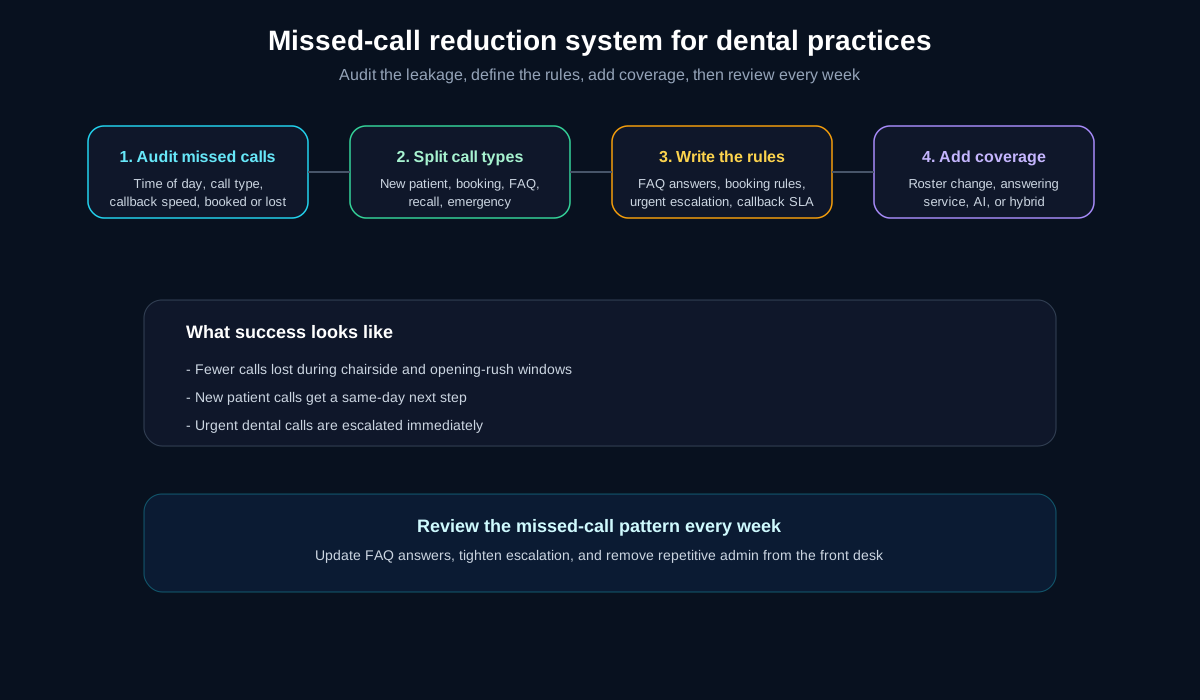
Step 1: Separate call types
Most practices treat inbound calls as one category. That creates messy handling because each intent needs a different next step.
At minimum, split calls into:
- new patient enquiries
- existing patient bookings and changes
- recall / overdue-patient responses
- FAQs
- emergency / clinical
That one change improves scripts and routing immediately.
Step 2: Write approved FAQ answers
Your front desk should not be inventing the same answers every day, and neither should a service provider or AI system.
Document approved answers for:
- hours
- location and parking
- new patient process
- general price posture
- health-fund acceptance
- emergency appointment wording
- cancellation policy
Approved answers improve consistency and make training easier.
Step 3: Define urgent escalation clearly
Dental practices get into trouble when "urgent" is left vague.
Write down exactly what must escalate immediately:
- swelling
- trauma
- severe pain
- bleeding
- post-procedure complications
- knocked-out or broken tooth
The system does not need to diagnose. It only needs to recognise the pattern and route fast.
Step 4: Put callback ownership on one role
If everyone can call back, nobody owns it.
Set a simple rule:
- new patient missed calls: callback within X minutes
- existing patient reschedules: callback within X minutes
- urgent dental calls: immediate escalation
Use a shared inbox, task list, or call log so nothing sits in personal memory.
Step 5: Improve the next step, not just the answer rate
Answering more calls is good. But the bigger gain comes when every routine call ends with a useful next step:
- booking confirmed
- times offered
- message logged cleanly
- callback window promised
- urgent alert sent
That is the difference between "we picked up" and "we resolved the intent".
Step 6: Review missed-call patterns weekly
Once the first fix is in place, spend 15 minutes each week reviewing:
- what still went unanswered
- which calls should have been escalated sooner
- which FAQs came up repeatedly
- where staff still had to reconstruct context manually
Missed-call reduction is not a one-time cleanup. It is an operating rhythm.
What needs to be documented for the front desk
If you want fewer missed calls and better recovery, document these items explicitly:
-
Booking rules Appointment types, durations, same-day slots, cancellation handling, and who may override the diary.
-
New patient intake rules What details must always be captured, what can wait, and which questions should never be answered definitively on the phone.
-
Emergency wording One approved script for urgent dental calls so responses are calm and consistent.
-
Callback SLA Who calls back, in what order, and how quickly.
-
Escalation contacts Which number or person gets after-hours or urgent matters.
Which fix fits which gap?
| Gap | Best first fix |
|---|---|
| Small number of missed calls, mostly during lunch | Adjust roster or call-forwarding rules |
| Heavy morning overflow | Overflow coverage or AI booking support |
| After-hours new patient leakage | AI receptionist or answering service after hours |
| Poor message quality | Structured capture workflow |
| Frequent reschedules and cancellations | Better booking workflow or calendar-connected AI |
| Urgent dental calls not routed reliably | Explicit escalation tree and on-call process |
You do not need the same solution for every gap. Many practices combine small operational fixes with a coverage layer.
Metrics that actually matter
Track metrics that reflect outcome, not vanity:
- missed calls per day
- callback time to missed new patient calls
- booked appointments recovered from missed calls
- after-hours leads captured
- cancellation slots refilled
- urgent escalations actioned within target time
If you only track total calls answered, you can miss the real business impact.
Mistakes that keep the problem alive
- Assuming the problem will disappear once staff "try harder".
- Leaving voicemail as the default after-hours system.
- Using vague notes instead of structured call capture.
- Treating new patient calls and emergency calls with the same callback speed.
- Failing to review where calls cluster in the day.
When to add an answering service or AI
Once you have the audit and the workflow basics, the decision gets easier.
- Add a human answering service when you want overflow coverage and human message-taking with minimal process change.
- Add an AI receptionist when you want routine calls handled end-to-end, especially new patient bookings, FAQs, and after-hours enquiries.
- Add a hybrid model when you want AI to do the repetitive work and humans to handle sensitive or edge-case calls.
That is why this page pairs naturally with Dental answering service vs AI receptionist.
Related guides
- AI receptionist for dentists in Australia - dental landing page and commercial overview.
- After-hours call handling for dental practices - after-hours triage and lead capture.
- Dental answering service vs AI receptionist - how to choose the right coverage model.
- AI receptionist for dental practices - detailed dental call-flow guide.
- How much does a receptionist cost in Australia? - compare hiring, outsourcing, and automation.
- Call forwarding Australia - practical setup help.
- AI phone agent vs answering service vs voicemail - broader comparison for service businesses.
FAQ
What is the fastest way to reduce missed calls in a dental practice?
Usually: identify the missed-call windows, document your top call types, assign callback ownership clearly, and add overflow coverage where the pattern is obvious. Most practices improve faster by fixing workflow first and then adding coverage technology second.
Are after-hours missed calls really that important?
Yes. After-hours calls are often high-intent because the caller has time to act and is actively looking for help. For a dental practice, that can mean a new patient, a recall patient ready to book, or someone with an urgent concern who will call the next clinic if nobody answers.
Should every missed call get an immediate callback?
Not necessarily in exactly the same way, but every missed call should have a defined next step. New patient and urgent calls should be prioritised ahead of routine existing-patient administration. The key is having a rule, not improvising each time.
Can AI actually help with missed calls, or is this still a staffing issue?
It can help materially when the missed calls are repetitive and process-driven: bookings, changes, FAQs, and after-hours capture. It does not replace human judgment for clinical or sensitive situations, but it can remove a lot of routine leakage from the system.
What if we are not ready for AI yet?
That is fine. The audit, escalation rules, FAQ pack, and callback ownership still improve performance even if you only change staffing, call-forwarding, or answering-service coverage. Better phone operations pay off regardless of the tool.
Next step
If your dental practice is losing calls, the best next move is to map the missed-call windows and compare them against the workflow you actually have in place today.
You can review pricing, book a walkthrough, contact us, or start with the dental industry overview at AI receptionist for dentists in Australia.